
Recipes for your next scientific decision
Explore how you can connect biological evidence across studies to investigate candidates, compare indications and plan your next experiments. Start with the question you need to answer and build a rationale you can inspect and revisit.
Start with your scientific question
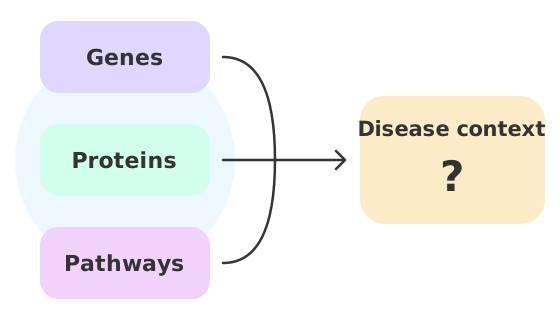
Disease marker context
Explore how genes, proteins and pathways relate to disease biology.
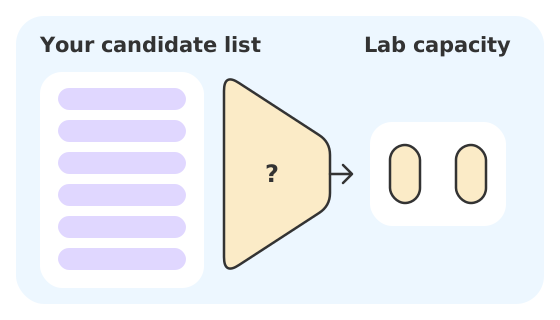
Marker prioritization
Compare your gene and protein candidates across datasets to decide which to investigate next.
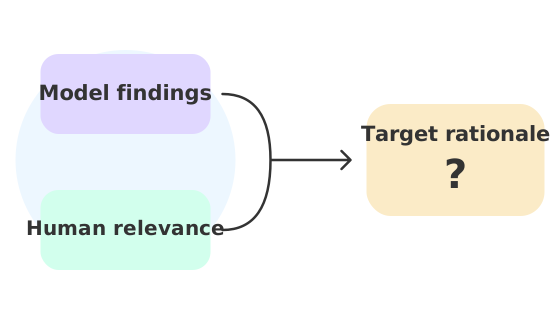
Target validation
Evaluate the support for your target hypothesis and clarify what to test next.
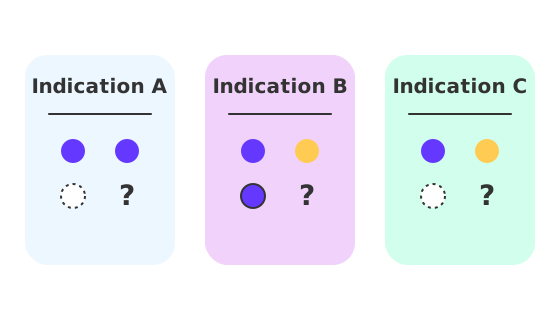
Indication prioritization
Compare candidate indications and explain which warrant further development and why.
Built to evolve with your program
Your data foundation remains useful beyond the first question. Add new studies and internal findings, revisit your analyses and update the rationale as your evidence and program priorities change.
Reuse relevant evidence for related targets, indications or experiments when its scope fits. Extend the foundation where a new question needs different data, keeping the sources and context accessible to your team.
What makes the evidence difficult to evaluate?
Findings spread across sources
You may have relevant findings in public studies, internal datasets and separate analyses. Bringing them into a shared context helps you see what each contributes to your question.
Different identifiers and biological settings
The same gene or protein can appear under different identifiers, while evidence from different tissues, species or study designs needs careful interpretation. You need to understand what can be compared and where the context differs.
Conflicting findings and evidence gaps
A signal in one study may be absent or reversed in another. You need to distinguish contradictory findings from missing coverage and assess them against the criteria that matter for your question.
A rationale that needs to evolve
New findings and changing program priorities can alter your interpretation. Keep the evidence and reasoning behind your conclusions accessible so you can revisit them as your question develops.